
Organisational culture is a specific set of values, beliefs, and behaviours shared by themembers of a company for retaining the image and reputation of the organisation.The cultural beliefs can influence the process of business operations,collaboration, communication, and business relationship embedded in an organisation.However, through analysing the current evidence, it can be stated thatorganisational leaders and managers play contributory role in setting theperfect tone of an effective corporate culture, which would be followed by theorganisation (DiDonato and Gill, 2015).
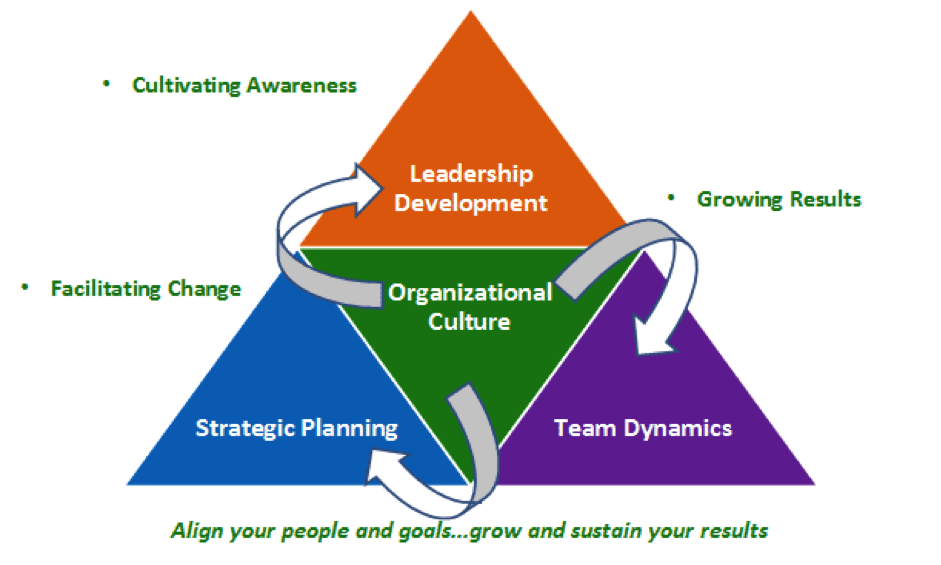
Various internal and externalfactors can influence the organisational culture.
Throughanalysing accurate evidence embedded in the leadership practices of culturallydiverse organisations, it can be stated that organisational culture is not onlyassociated with the professional skills of employees. It becomes influencedthrough the combined effects of social values, personal perceptions of involvedpersonnel, and many other external factors (McCalman and Potter, 2015). Forexample, Morrison Supermarket plc, one of the leading retailer company of UK,focuses on incorporating a culturally diverse workforce and advanced technicalbasis in their organisation for retaining the success and performancestandards. These would change the organisational culture and the environment ofthe workplace, which can influence the productivity level of the organisation.
Due to the multi-culturalworkplace environment, several issues have been raised often.
Now,let us discuss about the potential challenges associated with culturalpractices of the organisation.
- Implementation of newcommunication mediums for value-based transmission
Oneof the potential issue is communication after the transformation of organisationalculture, as organisational members expect communicational transformation aswell for revising the company values, mission, and vision (Schein, 2017). Forexample, often organisations like Morrison Supermarket plc needs to follow theprinciples of informal communication instead of formal communication process,for improving the employee-manager relationship. It is required to inform aboutthis change otherwise it can hamper the collaborative workplace culture.
- Interdependence betweencultural and structural change
Organisationalstructure is highly related with the organisational culture, as changes in oneaspect can enforce the changes on other factor. Since Morrison Supermarket isone of leading brand of UK retailer industry, therefore, the cultural types ofthis organisation belongs to the traditional hierarchy-based process.Traditional hierarchy structure cannot often motivate employees properly due tothe presence of a number of drawbacks, such as slow reaction to their problems,less interaction with management, less scope of participating organisationaldecision, and so on (Corfieldand Paton, 2016).
- Management of new cultural,environmental, and operational awareness
Ithink that managing the awareness level among the employees about the newcultures, environment, and operations, is crucial for maintaining thepositivity of organisational cultural beliefs. This aspect has directrelationship with the productivity and performance level of MorrisonSupermarket plc, as sudden modification in the organisational cultures cancreate confusion states among the employees (Pollack and Pollack, 2015).
Apartfrom this, several other aspects such as uncertain adversities, individualbeliefs, power distance, restraint characteristics, and many others can beconsidered as the possible challenges of organisational cultures.
Cultural transition and transformationrequire efficient strategic recommendations.
Nowlets take a look over the efficient strategic recommendations for managingcultural transition and transformation.
- Leaderscan take 3-step process for managing the organisational cultures, by includingproper behavioural aspects, systematic policies or approaches, and assumptionsof actions (Williamset al. 2017). Atfirst, it is necessary to explore the role of organisational culture and itsconsequences in front of the employees. At this viewpoint, efficient leadersplay the role of connector between the hierarchy and the recruited departmentalemployees of the organisation.
- Next,it is essential to explain the organisational mission, vision, targets, and objectives;as through this the employees can understand their roles and responsibilities,based on which the organisational reputation is dependent. Leaders can exploreall the relevant aspects about the cultural practices, and organisationalmission and vision, through which employees become motivated.
- Leadersneed to implicate a flat hierarchy-based structure in Morrison Supermarket plc,in which the culturally diverse employees can also take participation in thedecision-making process (Elsmore, 2017). Apart from this, transparency,autonomy, empathy, and leadership traits required to incorporate in operationalprocess by applying the proper leadership style for the retail organisation.
Conclusion
However,it is evidenced that maintenance of organisational culture is a very complex process;therefore, leaders also need to change their cultural management strategies. Finally,it can be concluded that management of organisational culture is required forfulfilling the long-term purposes in order to achieve better outcomes.
Reference List
Corfield, A. and Paton, R. 2016.Investigating knowledge management: can KM really change organisationalculture?. Journal of KnowledgeManagement, 20(1), pp.88-103.
DiDonato, T. and Gill, N. 2015. Changing anOrganization’s Culture, Without Resistance or Blame, Harvard Business Review,Jul-Aug 2015.
Elsmore,P. 2017. Organisational Culture: Organisational Change?: OrganisationalChange?. Abingdon: Routledge.
McCalman, J. and Potter, D. 2015. LeadingCultural Change: the theory and practice of successful organizationaltransformation. London: Kogan Page.
Pollack, J. and Pollack, R. 2015. UsingKotter’s eight stage process to manage an organisational change program:Presentation and practice. SystemicPractice and Action Research, 28(1), pp.51-66.
Schein, E. 2017. Organisational Culture andLeadership (5th Ed.). Hoboken, NJ: John Wiley and Sons Inc.
Williams, N.J., Glisson, C.,Hemmelgarn, A. and Green, P. 2017. Mechanisms of change in the ARCorganizational strategy: increasing mental health clinicians’ EBP adoptionthrough improved organizational culture and capacity. Administration and Policy in Mental Health and Mental Health ServicesResearch, 44(2), pp.269-283.
 Dev’s Blogs